
Fastener
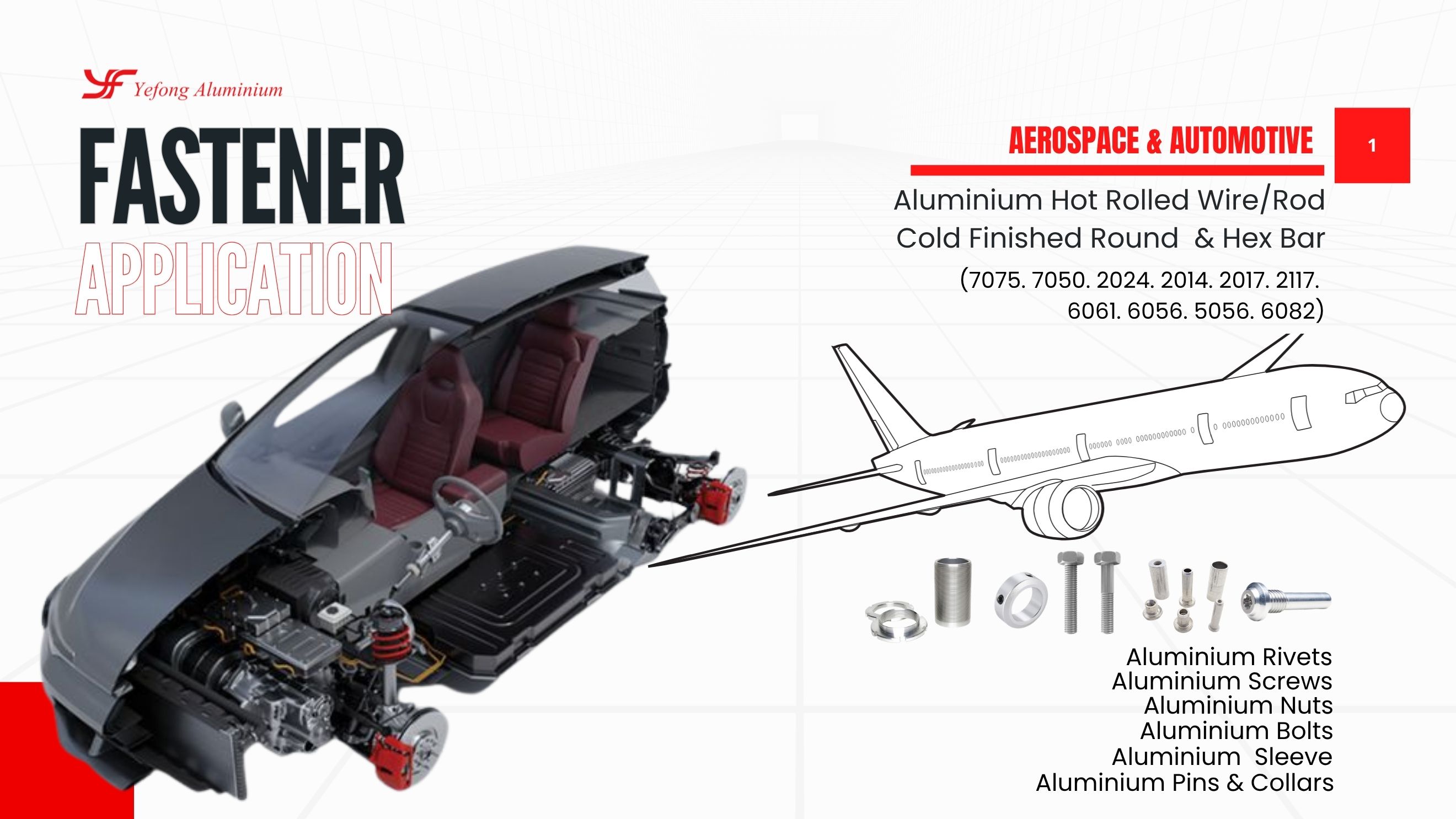
Fastener manufacturers have very specific demands on their raw material. Consistent grain structure, tight dimensional tolerances, reliable surface quality, and predictable cold heading or cold forging behavior — these are the things that keep your production line running smoothly and your scrap rate low.
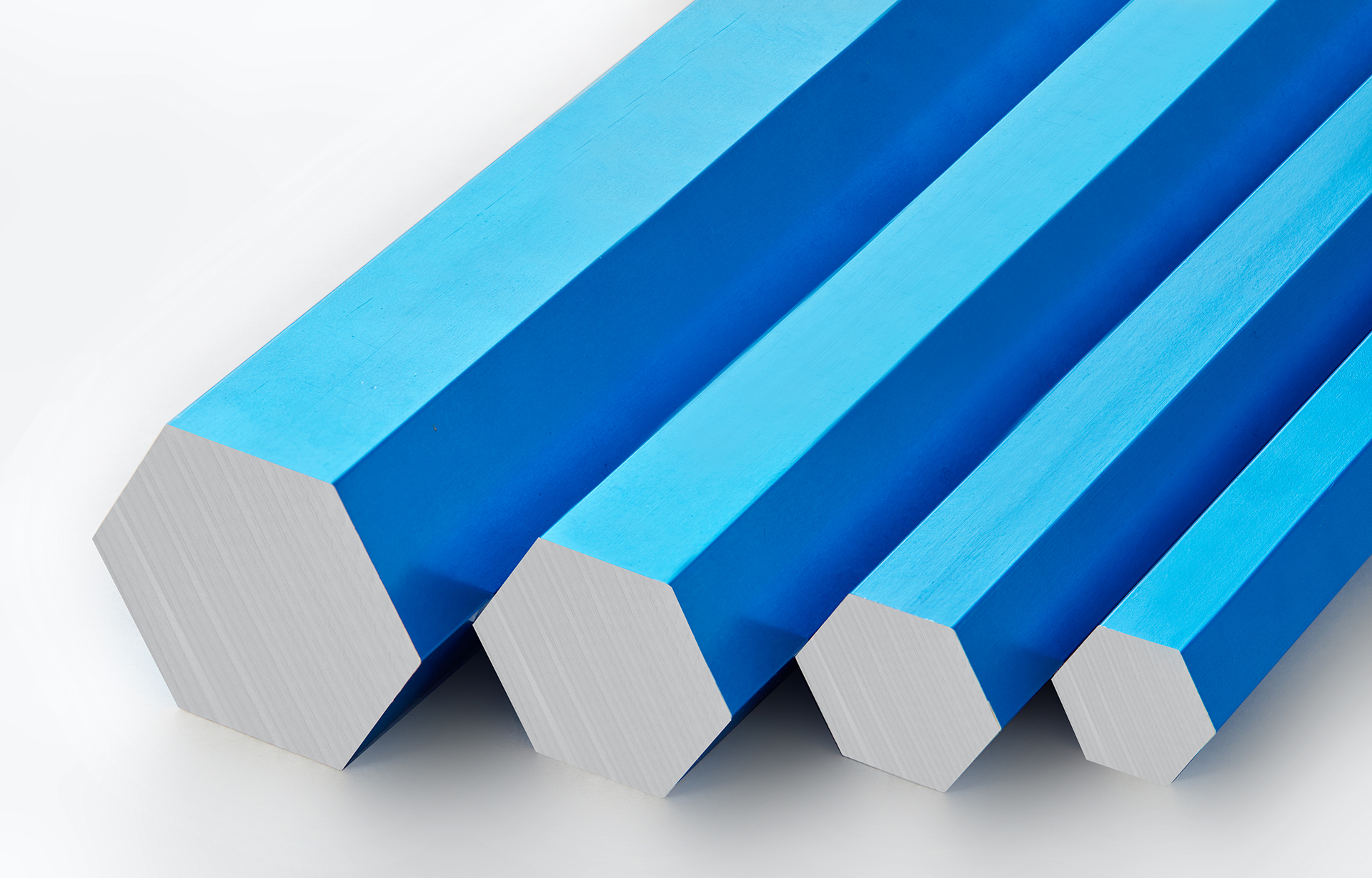
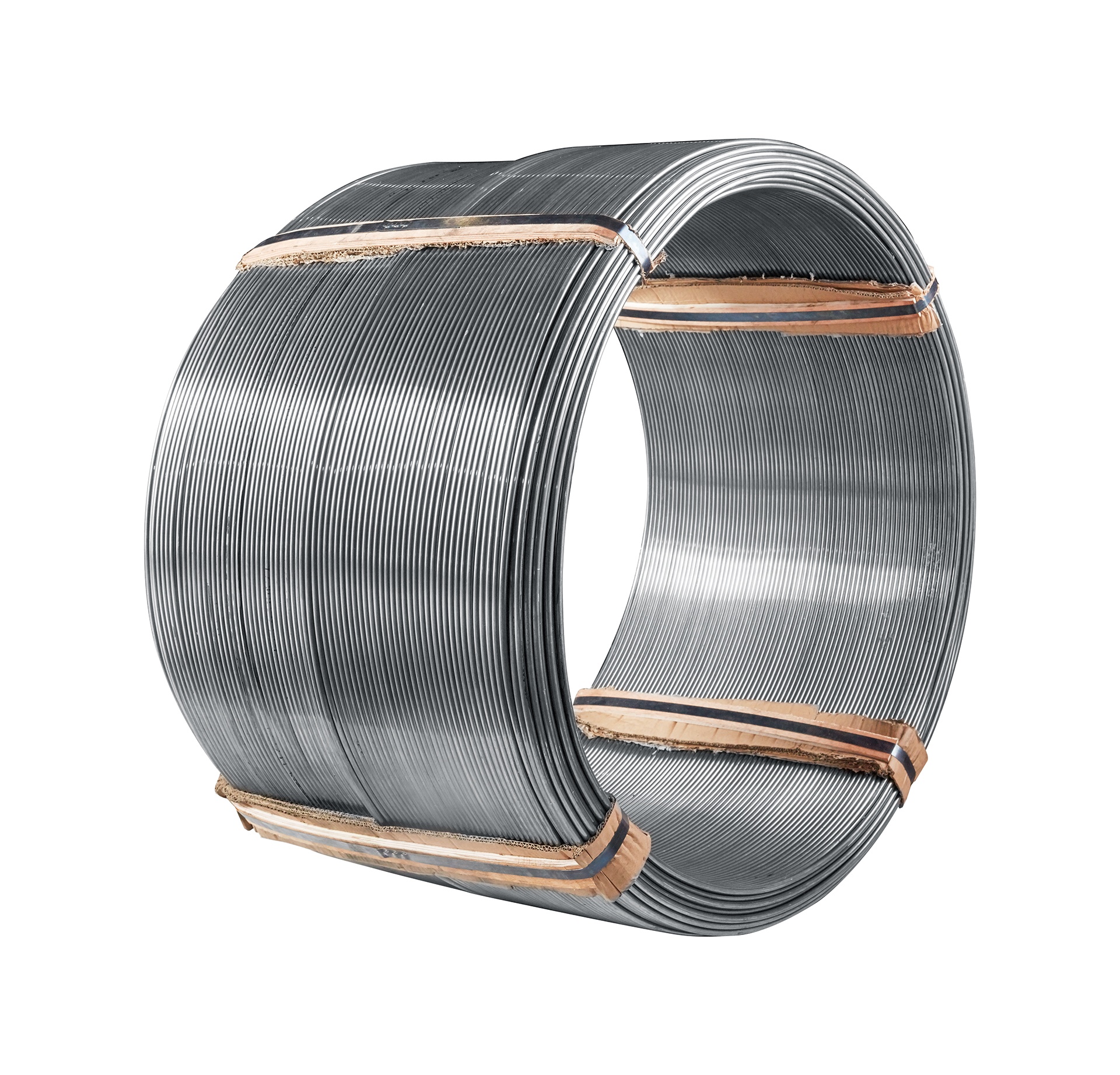
Taiwan Ye Fong Aluminium produce aluminum hot-rolled Finished Wire/Redraw Rod and straight bar to fastener manufacturers mainly across the aerospace and automotive industries. We are one of the few aluminum mills in Taiwan using a hot rolling process rather than traditional continuous casting, which results in a finer, more uniform grain structure and better formability for cold heading and cold forging fastener applications.
Our aluminum wire/rod is available from 2mm to 32mm in diameter, with surface shaving available in-house. On-line eddy current inspection and ultrasonic testing are performed as standard.
**More product details, please check here.
Why Hot Rolling Makes a Difference
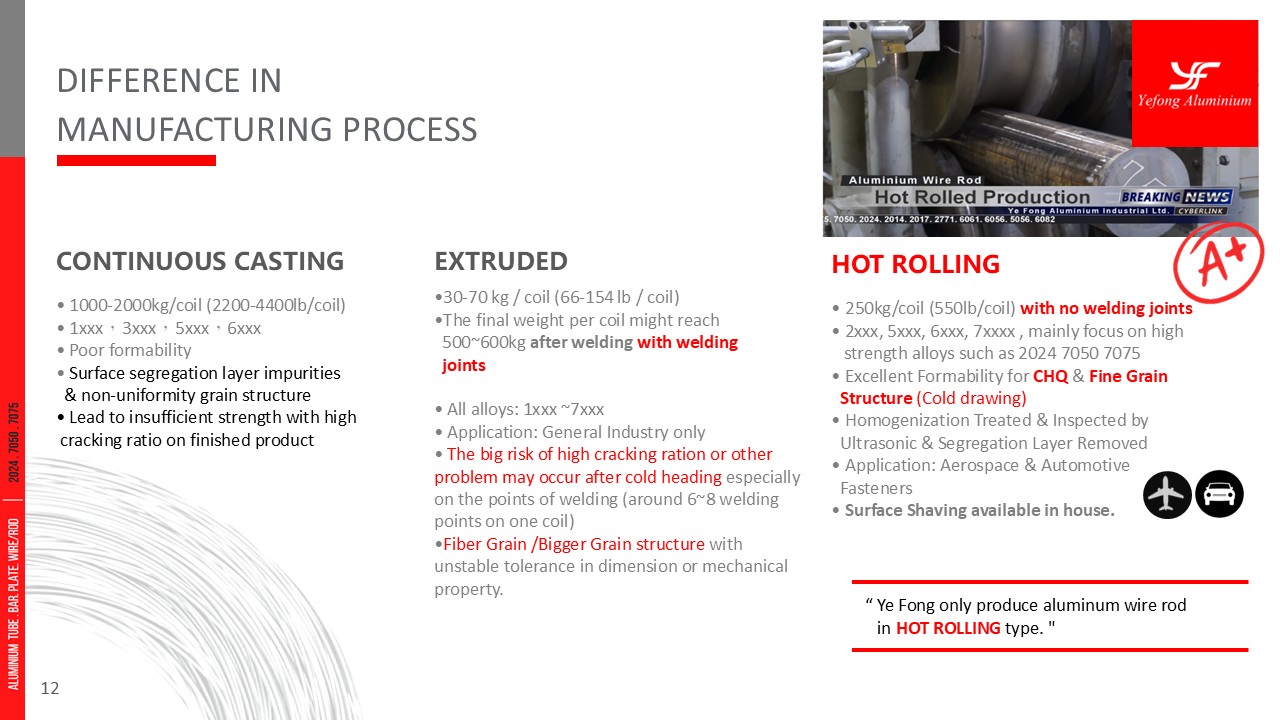
Most aluminum wire rod in the market is produced by continuous casting and rolling, which can lead segregation layers and inconsistent microstructure. Our aluminum hot rolling process starts from homogenization-treated billets, which eliminates segregation and delivers following benefits :
- Finer and more uniform grain structure
- Better cold heading and cold forging formability
- More consistent mechanical properties batch to batch
- Lower risk of cracking ratio during downstream forming operations
Fastener Aluminium Alloys FAQ
Q1: Why should fastener manufacturers choose hot-rolled aluminum wire/rod over continuous casting?
A1: Aluminum hot-rolling process eliminates segregation layers and inconsistent microstructures commonly found in traditional continuous casting. By starting from homogenization-treated billets, Taiwan Ye Fong Aluminium delivers a finer, more uniform grain structure that provides superior formability and zero welding joints for high-performance cold heading and cold forging fastener manufacturing.
Q2: What are the best aluminum alloy materials for manufacturing aerospace rivets and structural fasteners?
A2: The most recommended aluminum alloys for aerospace fasteners are 2024, 7075, and 5056. Alloy 2024 is widely used for solid rivets and structural bolts due to its high strength and fatigue resistance. Alloy 7075 provides maximum load-bearing capacity for aircraft collar fasteners, while Alloy 5056 serves as the standard for exceptional corrosion resistance.
Q3: Which aluminum alloys are optimized for automotive rivet nuts and structural bolts?
A3: Aluminum 6061, 6056, and 6082 are the workhorse alloys engineered for automotive fastener applications. They offer an optimal balance of good mechanical strength, excellent corrosion resistance, and highly predictable cold heading behavior, making them ideal for high-volume automotive rivet nuts and thread inserts.
Product Forms Available
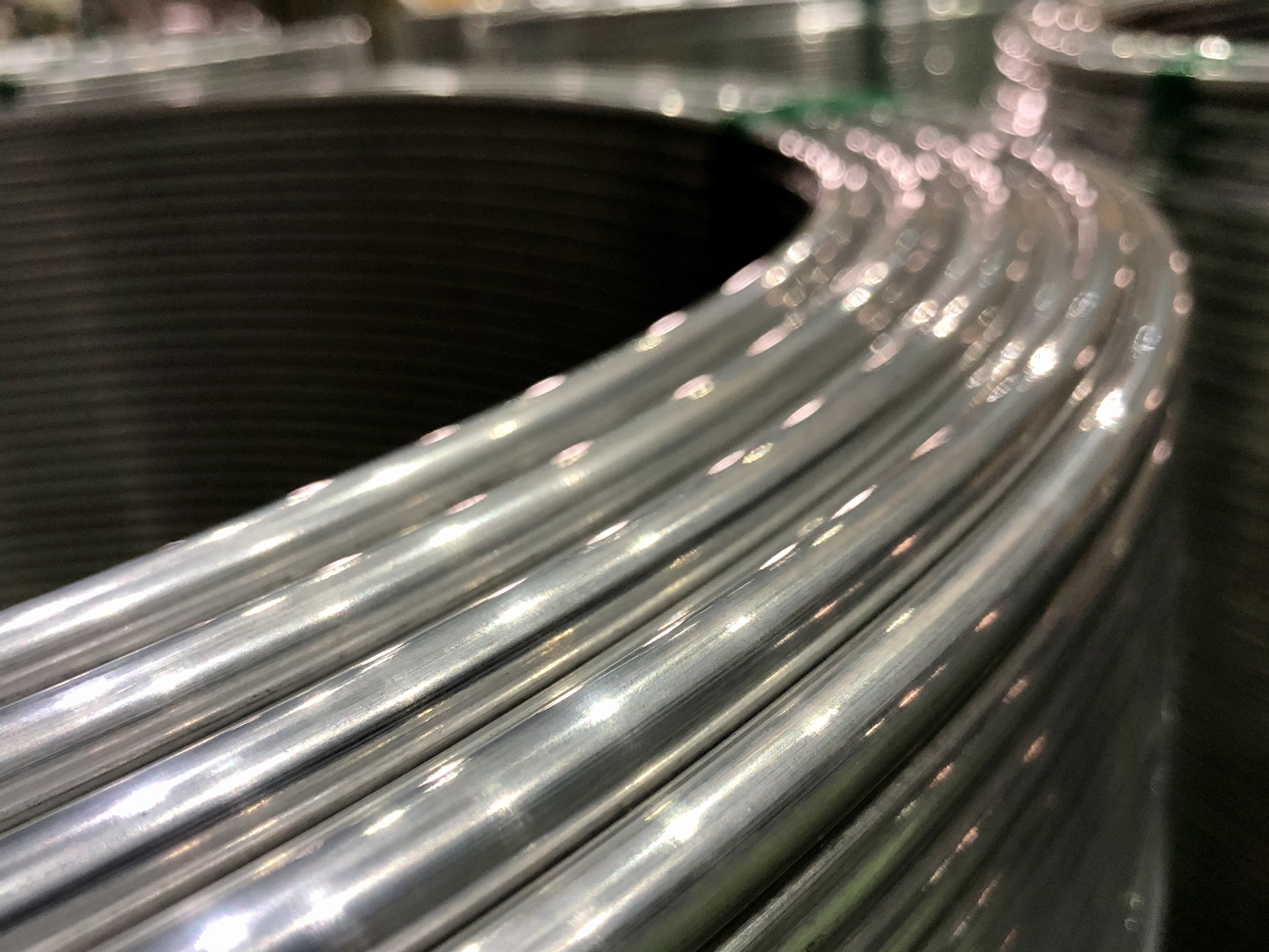
Aluminum Hot-Rolled Redraw Rod & Finished Wire
- Diameter of Finished Wire: 2mm – 30mm (0.08″ – 1.181″)
- Diameter of Redrawn Rod : 9.5 / 11.4/ 13.8/ 16.8/ 20 / 22/ 25/ 28 / 32 mm (0.374″ / 0.449″ / 0.543″ / 0.661”/ 0.757”/ 0.866”/ 0.984”/ 1.102”/ 1.259”)
- Surface: as-hot rolled or shaved (in-house shaving capability)
**Contact us at https://www.ye-fong.com/contact if you have any questions.
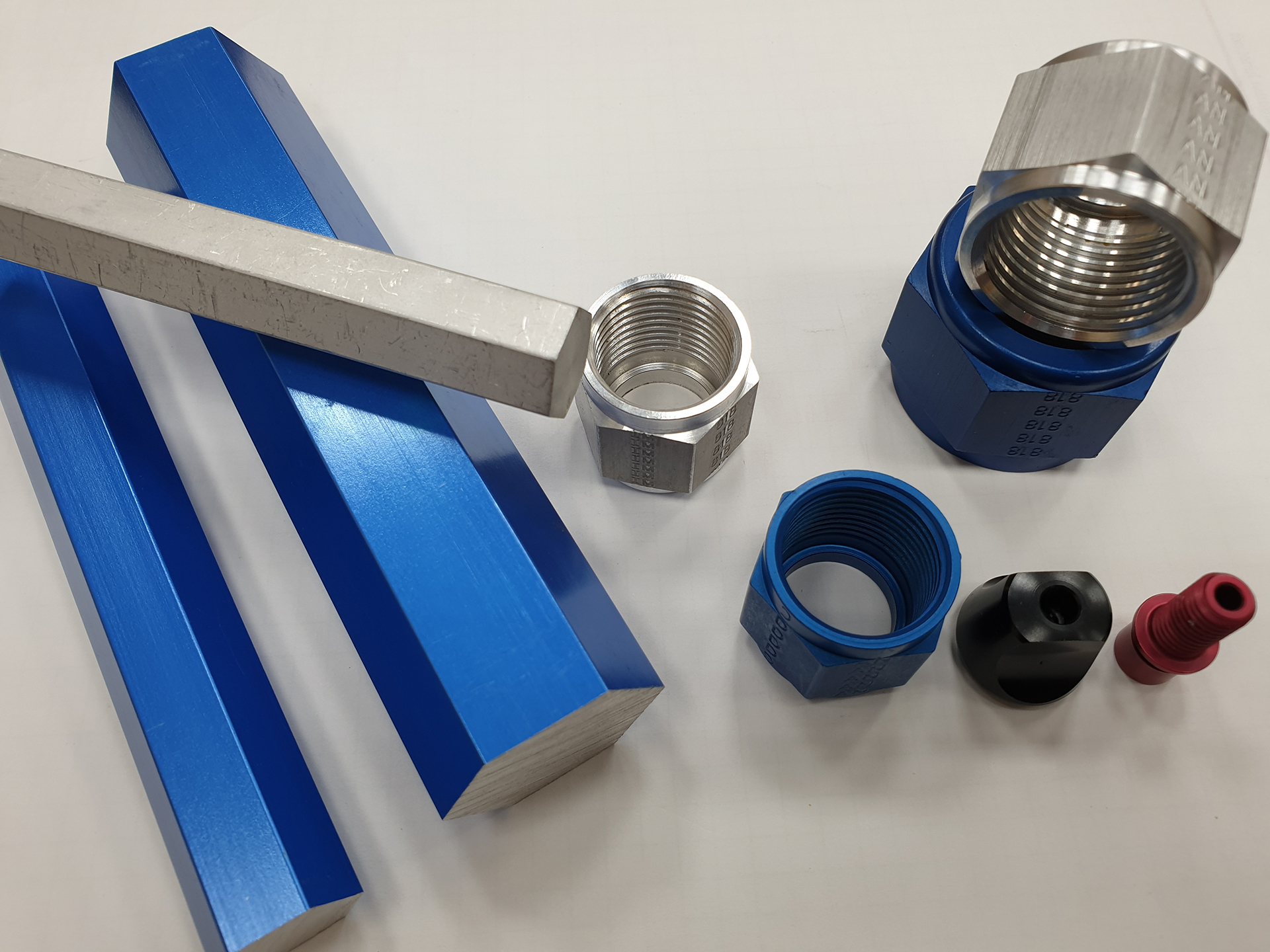
Aluminum Alloys Materials for Aerospace Fasteners
- 2024
The most common alloy for aerospace rivets and structural fasteners. High strength with good fatigue resistance. Widely used for solid rivets, blind rivets, and structural bolts in aircraft assemblies.
- 2017 / 2117
Traditional rivet alloys with good cold working characteristics. 2117 is particularly suitable for driven rivets due to its excellent cold heading behavior in the as-received condition.
- 7075
High-strength aerospace fastener alloy for bolts, collar fasteners, and structural applications requiring maximum load-bearing capacity.
- 5056
The standard alloy for aerospace rivets requiring good corrosion resistance. Also used for thread inserts and collar fasteners.



Aluminum Alloys Materials for Aerospace Fasteners
- 2024
The most common alloy for aerospace rivets and structural fasteners. High strength with good fatigue resistance. Widely used for solid rivets, blind rivets, and structural bolts in aircraft assemblies.
- 2017 / 2117
Traditional rivet alloys with good cold working characteristics. 2117 is particularly suitable for driven rivets due to its excellent cold heading behavior in the as-received condition.
- 7075
High-strength aerospace fastener alloy for bolts, collar fasteners, and structural applications requiring maximum load-bearing capacity.
- 5056
The standard alloy for aerospace rivets requiring good corrosion resistance. Also used for thread inserts and collar fasteners.
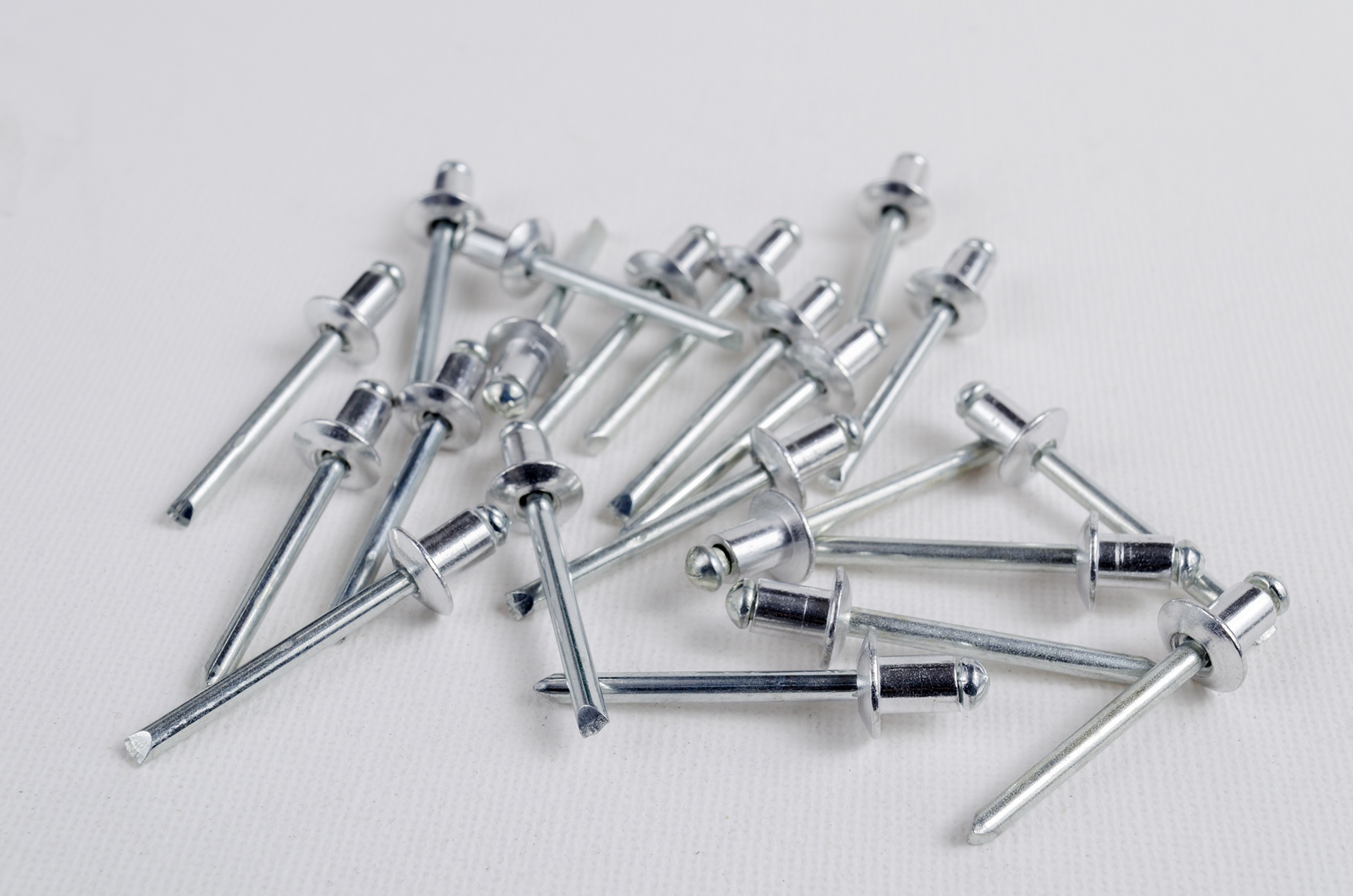
Aluminum Alloys Materials for Automotive Fasteners
- 6061 / 6056 / 6082
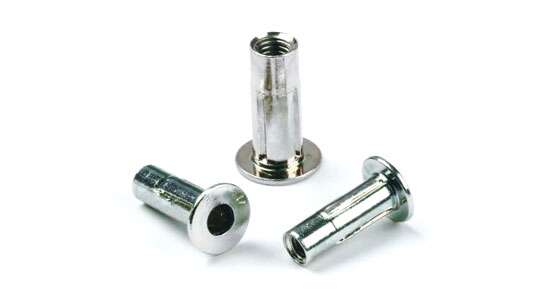
The workhorse alloys for automotive fastener applications. Good strength, excellent corrosion resistance, and reliable cold heading behavior. Widely used for rivet nuts, thread inserts, and structural bolts.
- 4032
An aluminum-silicon alloy with low thermal expansion, suitable for pistons and high-temperature fastener applications.

Aluminum Alloys Materials for Automotive Fasteners
- 6061 / 6056 / 6082
The workhorse alloys for automotive fastener applications. Good strength, excellent corrosion resistance, and reliable cold heading behavior. Widely used for rivet nuts, thread inserts, and structural bolts.
- 4032
An aluminum-silicon alloy with low thermal expansion, suitable for pistons and high-temperature fastener applications.